Need a Technical Advice?

3-Ton Vertical Reciprocating Conveyor (VRC) Lift with Copper-Zinc-Lead-Free Specification for Lithium-Ion Battery Material Handling in China

Project Overview

This project involved the custom engineering and indoor installation of three heavy-duty 3,000 kg (3-ton) Vertical Reciprocating Conveyor (VRC) systems at a high-capacity lithium-ion battery manufacturing plant in China. The VRCs (Models SJD3.0-4.5 and SJD3.0-20.1) were deployed to automate the vertical transport of heavy raw material “ton bags” mounted on 

1200×1200mmpallets between the ground floor storage and the elevated mixing/feeding mezzanines. 

VRC Elevation & Workflow Specifications

[Level 3: 20.1m] Mixing & Feeding Mezzanine VRC 2 & 3 Discharge
▲ Vertical Travel: 20.1m | Speed: 30 m/min ▲
[Level 2: 10.4m] Pre-treatment Station VRC 3 Intermediate
[Level 1: 4.5m] Primary Processing VRC 2 Intermediate
[Ground: 0.0m] Forklift / Pallet Jack Loading VRC 1, 2, 3 Infeed

The system consists of three distinct lifts:

    • Lift No. 1: Serving ground level (0m) to intermediate mezzanine (4.5m).

    • Lift No. 2: Servicing three stops (0m/ 4.5m / 20.1m).

    • Lift No. 3: Servicing three stops (0m/ 10.4m/ 20.1m).

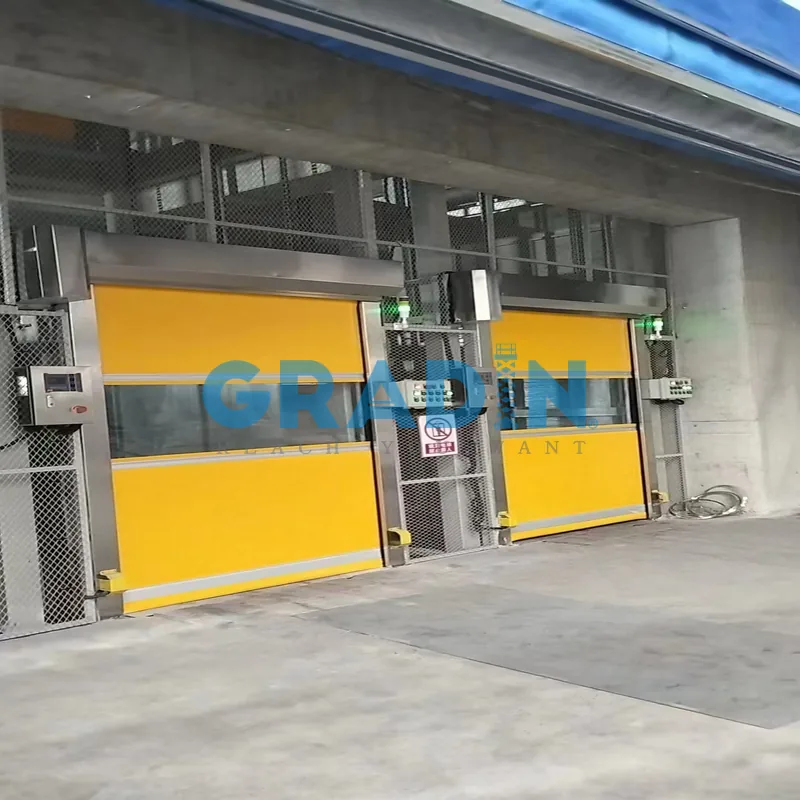
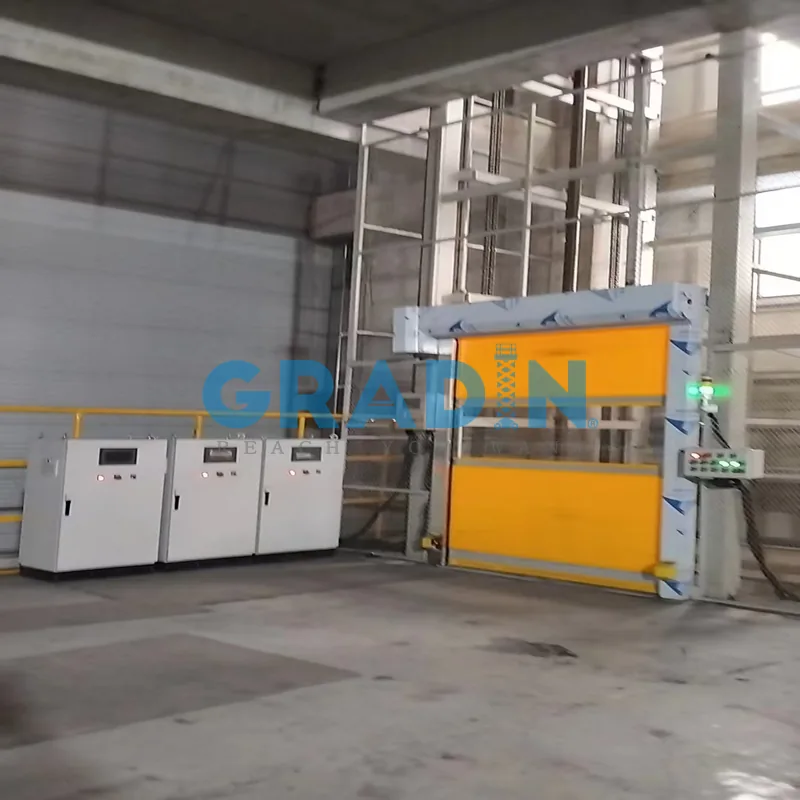
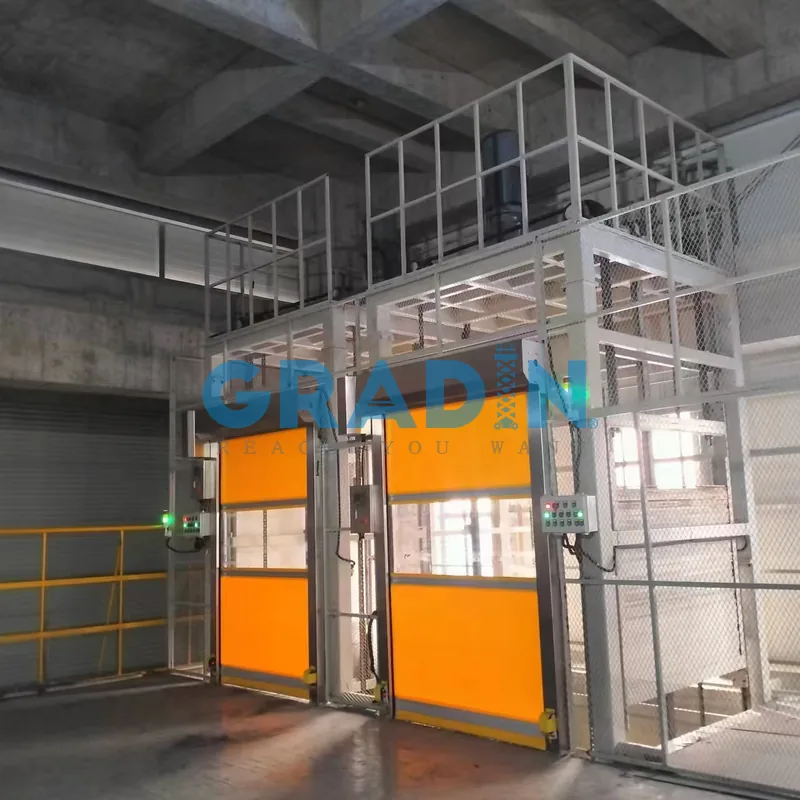
Operating at a vertical velocity of 30 m/min (0.5 m/s), the lifts are engineered with a strict Copper-Zinc-Lead-Free specification to prevent active battery material contamination. Controlled by a Siemens PLC and an Inovance Variable Frequency Drive (VFD), this system provides a leveling accuracy of ≤±3mm. The VRCs are fully integrated with interlocked, yellow PVC rapid-roll doors at each landing to ensure dynamic separation between levels. The installation conforms to  EN 1570-1 Safety Requirements for Lifting Tables, achieving high-throughput, contamination-free vertical material logistics.

Challenge & Solution

Challenge

Operating a heavy-duty vertical transport system in a lithium-ion battery cleanroom environment presents strict material compatibility and operational demands. The engineering team identified several critical technical and logistical challenges during the site evaluation:

  • Zero-Tolerance Metallic Contamination: In lithium-ion cell manufacturing, trace contact with copper (Cu), zinc (Zn), or lead (Pb) is catastrophic. Standard material handling equipment relies on brass bushings, copper conductors, zinc-galvanized fasteners, and lead-based structural paints. Wear particulates from these metals can migrate into the active cathode/anode powders, causing micro-short circuits in the finished cells. Historically, using standard lifts with conventional materials contributed to a 1.4% cell defect rate, translating to approximately $240,000 in monthly scrap losses for a standard high-capacity line.

  • Severe Vertical Logistics Bottlenecks: The mixing and feeding mezzanines at 4.5m and 20.1m require continuous replenishment of raw active materials. Standard industrial freight elevators, operating at speeds of only 6–8 m/min with manual gate mechanisms, limited throughput to 4.5 pallets/hour. To meet the active mixing line’s demand of 30 pallets/hour, the plant required 3 continuous forklifts per shift, generating $15,000/month in lease, fuel, and maintenance costs, while keeping 6 operators per shift occupied (18 operators total across three shifts, costing $21,600/month in labor).

  • High-Torque Dynamic Forces at 20.1-Meter Heights: Lifting a 3,000 kg (3-ton) concentrated payload to a height of 20.1 meters at a velocity of 30 m/min introduces massive kinetic and inertial forces. During rapid acceleration and deceleration cycles, standard guide rails experience high lateral forces, which can cause mast flex, guide shoe binding, and a failure to meet the strict leveling tolerance of ≤±3mm.

  • Cleanroom Humidity and Dust Containment: The mixing floor cleanroom requires precise humidity control and dust isolation. An open vertical shaft acts as a chimney, allowing moisture and ambient dust from the ground floor warehouse to migrate upward. This compromises the dry cleanroom atmosphere and threatens the quality of the active chemical compounds.

  • Anchorage and Structural Foundation Rigidity: Because of the high dynamic load factors generated by the 30 m/min travel speed, standard surface-mount anchorage was structurally insufficient. The installation required a deep-anchoring solution with an anchoring depth of >250mm into a reinforced C35 concrete foundation (thickness >300mm) to prevent structural shifting over a 15-year operational lifecycle.

Solution

To address the stringent demands of the lithium-ion battery plant, the engineering team designed a highly customized, 3-ton Vertical Reciprocating Conveyor (VRC) system based on SJD3.0-4.5 and SJD3.0-20.1 models. The solution integrates specialized metallurgy, heavy-duty structural anchoring, and closed-loop automation logic.

  • Copper-Zinc-Lead-Free Material Substitution: To eliminate the risk of active battery material contamination, the entire VRC system was engineered to a strict copper-zinc-lead-free specification. All standard galvanized components were replaced with high-tensile carbon steel or 304 stainless steel. Traditional brass and bronze bearings were substituted with specialized composite sleeve bearings. Exposed electrical conductors and connectors were tin-plated or enclosed in sealed conduit runs to prevent any copper exposure. The entire VRC frame was finished with an epoxy-based RAL 7032 protective paint, strictly certified as free of copper, zinc, and lead compounds.

    • Result: This complete elimination of trace metal contaminants resolved the micro-short circuit issues, reducing the cell defect rate from 1.4% to less than 0.05%. This adjustment saved the plant approximately $230,000 per month in scrapped cell materials.

  • High-Velocity Closed-Loop Powertrain: Vertical motion is driven by an 18 kW / 380V / 50Hz brake motor paired with a heavy-duty reduction gear. The control system integrates a Siemens SIMATIC S7 PLC with a high-performance Inovance MD Series VFD to execute smooth acceleration and deceleration S-curves. The VFD minimizes the mechanical shock generated by lifting a 3,000 kg payload at 30 m/min. Precision leveling sensors on each floor, combined with Omron/SICK photoelectric positioning, ensure a consistent stopping tolerance of ≤±3mm

    • Result: The travel time from the ground floor to the 20.1-meter mezzanine was reduced to under 45 seconds. This increased vertical logistics throughput from 4.5 pallets/hour to 45 pallets/hour (a 900% increase), meeting the mixing lines’ peak demand of 30 pallets/hour.

  • Heavy-Duty Anchorage and Structural Bracing: To absorb the dynamic forces of a 3-ton load moving at 30 m/min over a 20.1-meter vertical span, the VRC uses heavy-duty T90 elevator-grade guide rails and a reinforced Q345B steel mast. The foundation was engineered with an anchor bolt embedment depth exceeding 250 mm into a reinforced C35 concrete foundation (minimum thickness of 300 mm).

    • Result: The deep anchoring design eliminated structural mast flex, securing a 15-year mechanical service life.

  • Cleanroom Climate and Humidity Isolation: To protect the dry atmosphere of the mezzanine cleanrooms, the VRC shaft is wrapped in a full-height safety enclosure. Each landing station is equipped with automated yellow PVC rapid-roll doors with clear vision panels (W1,800 mm x H2,500 mm). Managed by Automated Safety Interlocking Logic, the PVC doors only open when the lift cabin has reached a stationary, leveled state, keeping the vertical shaft sealed during travel.

    • Result: This configuration minimized air migration between floors, protecting the cleanroom’s dry dew point and preventing raw powder contamination.


ANNUAL COST BENEFIT ANALYSIS
Rejection Rate Reduction $230,000 / month → $2,760,000 / yr
Labor Optimization (18 – 3) Operators → $216,000 / yr
Forklift Fleet Reduction 85% Fleet Cut → $153,000 / yr
TOTAL OPERATIONAL BENEFIT $3,129,000 / yr

Technical Specifications

The following table summarizes the key engineering, structural, and electrical parameters for the SJD3.0 series vertical reciprocating conveyors. These specifications reflect the strict non-ferrous and precision alignment requirements of the cleanroom facility.

Parameter Specification / Engineering Detail
Model Designations SJD3.0-4.5 (Lift No. 1) <br> SJD3.0-20.1 (Lifts No. 2 & 3)
Rated Load Capacity 3,000 kg (3.0 Metric Tons)
Platform Dimensions 2,200 mm (L) x 1,515 mm (W)
Shaft Pit Dimensions 2,550 mm (L) x 2,260 mm (W)
Cabin Inner Dimensions 2,200 mm (L) x 1,515 mm (W) x 2,200 mm (H)
Floor & Safety Mesh 5mm Checkered Steel Plate floor; safety wire mesh on sides & top
Material Entry/Exit Direction 1,515 mm Width Face (Pass-Through Configuration)
Maximum Cargo Dimensions 1,200 mm (L) x 1,200 mm (W) x 2,000 mm (H)
Applicable Pallet Size
1,200×1,200mm

 Standard Pallets

Vertical Lifting Stroke Lift 1: 4,500 mm <br> Lifts 2 & 3: 20,100 mm
Lifting Speed
≥30

m/min (≥0.5
 m/s Adjustable)

Lifting Geared Brake Motor 18 kW / 380V / 50Hz (Complies with high-efficiency standards)
Automation Control PLC Siemens SIMATIC PLC Systems
Variable Frequency Drive (VFD) Inovance MD Series Inverters
Low-Voltage Electrics Schneider Electric Power Components
Leveling Positioning Accuracy
±3

mm (Photoelectric & inductive closed-loop alignment)

Metallurgy / Material Prohibitions Strictly Lead-Free, Zinc-Free, and Copper-Free 
Finish & Coating Spec Epoxy Spray Paint, RAL 7032 (Special non-zinc formulation)
Anchor Bolt Specification High-tensile mechanical anchors, embedment depth > 250 mm
Required Foundation Reinforced C35 concrete slabs, thickness > 300 mm
Landing Safety Barriers PVC Rapid-Roll Doors (W1,800 x H2,500 mm; Yellow + Vision strip)
Environmental Enclosure External full-height protective wire mesh (lead-zinc-copper-free)

Project Gallery